
… also in this edition of The Weekly: a dance of water and light and a quick kook at Microsoft’s original logo.
Here is an unsubstantiated thesis: One reason society does not invest in art or pay artists is because we do not teach about art or art history in school, like we do math, science or regular history.
Had societies across the world taught kids more about art and art history in school, then they would be more appreciative of art and artists at large. So much so, that upon growing up and having some disposable income they would invest in, and pay for art, just as they do for an electronic gadget or a daily cup of coffee from Starbucks that might cost $4.
Obviously I have no way of proving this, which is why having a blog called Winter Rant helps. But indulge my rant for a moment. Speaking from personal experience I can safely say that I picked up computer science because I found it be interesting at an early age of eleven, when I was introduced to programming in sixth grade. My choice to study computer science in university was not based in economics, but instead it was founded in honing the craft of programming.
Creating and distributing works of art has certain limitations that software code does not. So, developing an industry around art might be harder. But I would still contend that the market for works of art — paintings, sketches, photographs, sculptures — would be far bigger had we educated kids about art and their histories.
A society would have a deeper appreciation (and market) for Vincent van Gogh’s works, like The Starry Night, had they learned about it in school. Societies would be more interested in the contemporary artists of their times, if they were taught about artists from the past. Can you name any contemporary artists of our time? I had to Google it. I know about Getty and Shutterstock, but I do not know about the latest work by Banksy.
Instead, we find ourselves in a strange place where artists find their livelihoods threatened by technological advances such as Generative AI. After all, why should anyone pay for stock photography1 when ChatGPT can spit out realistic looking images for their slide decks at work?
Obviously, OpenAI should be paying the artists who produced the stock photography. Using such works for training AI models without permission or compensation is wrong2. Different nations are taking different legal approaches3 on the subjects of copyright and compensation of art for AI model training. But questions around the legality of GenAI dodges a subtler question: should the vast majority of artists only make money through the rungs and avenues of stock art?
Should works of creativity that gets sold for pennies on the dollar (or pound, or euro) be the lowest common denominator when it comes to conduits of livelihoods for artists? Why do we not have thriving art studios4 that are run by professional artists who render their services to say, consult on, or create art?
It is easy to say that there are other reasons why art has not found commercial success: art cannot be mass produced; art does not put a roof over your head nor does it feed you; art does not make you more productive like a tech gadget or software can; art does not come cheap; it is difficult to distribute art.
But those explanations strike me as lazy. None of those reasons explain why we are fascinated with the aesthetics of Studio Ghibli without knowing much about Miyazaki. Why are we more culturally engaged in mass-producing memes styled in the aesthetic of Studio Ghibli, than we are in the ethos and philosophy behind the works of Miyazaki or the creators at Studio Ghibli?
I think this to be the case because we have not been taught about the painstaking work that goes into creating art. We have not been trained to even think about art as an area of our societies’ economies. I think that a lack of education around art and art history has created and sustained a larger apathy towards art and artists.
It would be a radical experiment to try teaching art history in schools where instead of history, we simply taught art history. Or what if started coupling classes on arts and crafts with lessons on the histories of arts and artists?
History classes would be a lot more interesting. The history text books will be full of artworks and might be less boring to flip through. Also consider that kids who do not have a natural talent to draw, might be drawn to aesthetics and color … so learning about the history of art might be a good way for kids with little-to-no talent in drawing to engage in an art classroom.
We won’t try, so we will never know. But what if we tried?
Life is for Living
Instead of rushing through life, I find myself standing still more than I used to. It has allowed me to notice life around me. And when not intensely private, I capture it with my camera.
A Dance of Water and Light

Fly like an 🦅
Life mimics art?

Fascinating me: Microsoft’s original logo
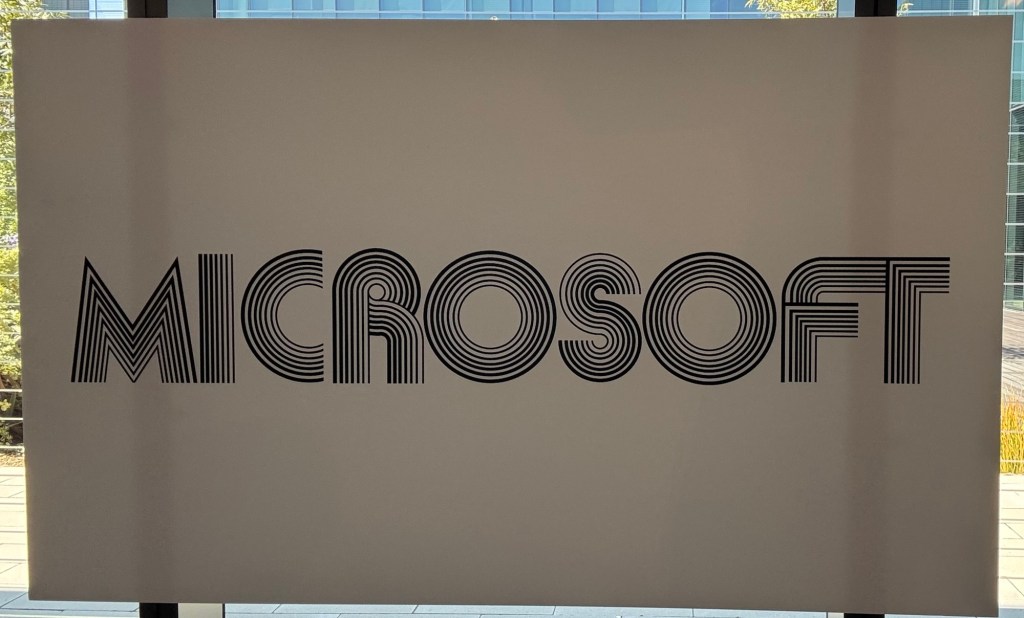
Speaking of art and software … Microsoft’s original logo really caught my attention recently. It came to light as part of Microsoft’s 50th year celebrations. (Full disclosure: I work for Microsoft. And my views and words on this and any other blog are my own, and do not reflect the views of my employer.)
This logo goes hard as a work of art. The strokes, the symmetry, the attention to detail on how the S, R and F were rendered — ::chef’s kiss::. Look at the choice to blend F and T. The cat-like spikes on M. This logo begs for a case study in typography. I wonder why Microsoft decided to move on from it. I also bet it reflects the limitations of printing technology of the time — certainly has a dot-matrix feel to it. I might dig into the history of this one. Might even be a fun project to recreate it with a pen-plotter and procedural code.
- Yes, I consider photography to be a form of art. ↩︎
- Legal systems the world over will have different takes on the idea of right/wrong when it comes to training on data without copyright. But not asking for permission to use someone else’s work is wrong. It just is. And not paying to use that work is akin to robbery. But we should still follow what the law of our respective lands have to say on this subject. ↩︎
- Irrespective of how it shakes out legally, I do think we are fast approaching a point where GenAI is remaking the economy — to a point where GenAI might be too big to fail. Putting it differently: if the investments in Generative AI do not pan out, especially because it becomes illegal and/or too expensive to train the AI models, then it might sink a good bit of the world economy with it. More on this later. ↩︎
- The lack of thriving art studios was the case even before generative AI. ↩︎


 Winter Rant
Leave a reply to vpalepu Cancel reply